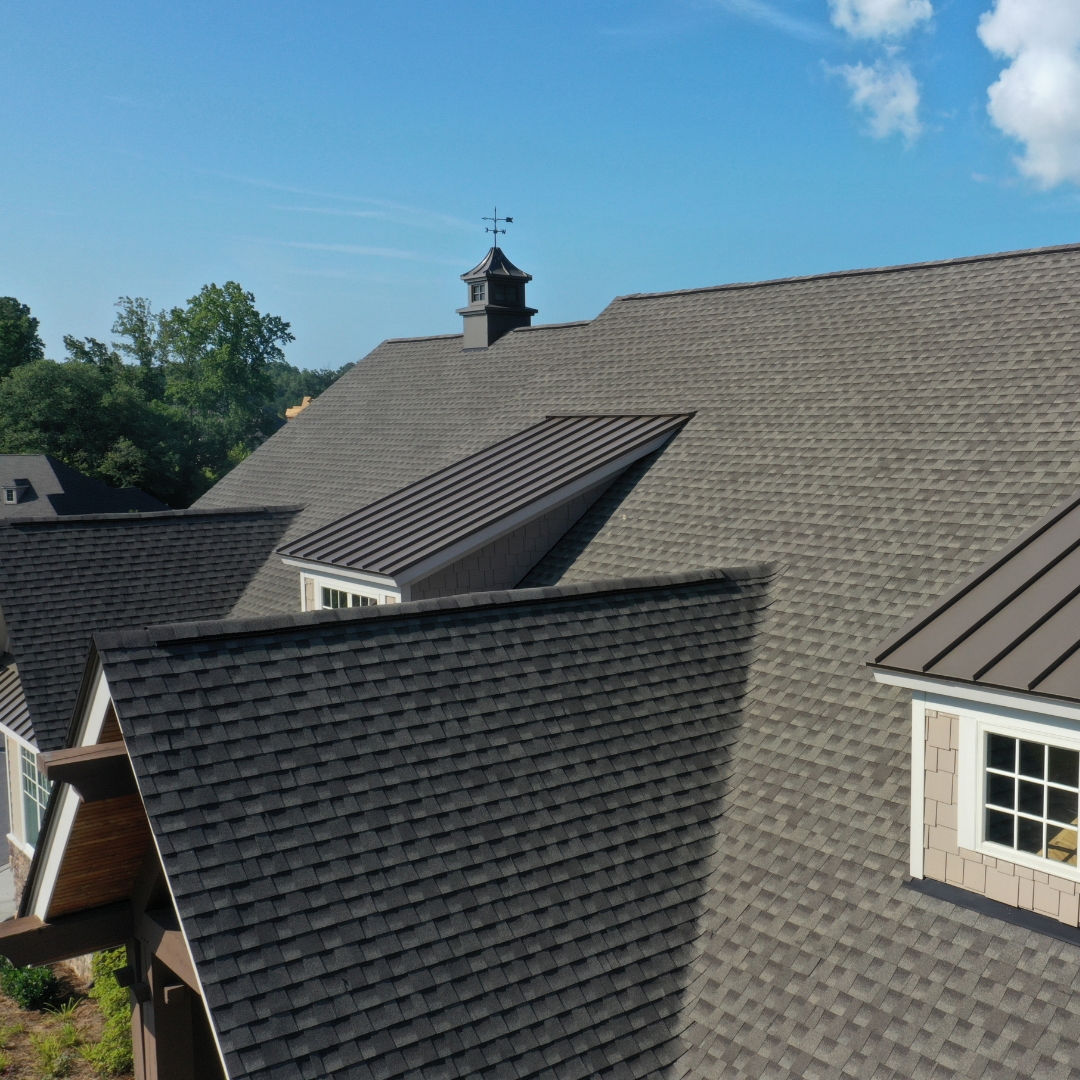
Asphalt shingles are the most popular roofing material in North America due to their cost-effectiveness, versatility, and ease of installation. They come in two main types: three-tab and architectural shingles. Architectural shingles are thicker and more durable, offering better wind resistance and longevity compared to three-tab shingles. Available in a wide range of colors and styles, they can complement various architectural designs. Asphalt shingles typically last between 15 to 30 years, depending on the quality and local weather conditions. While affordable, asphalt shingles have a shorter lifespan compared to other materials. They can deteriorate faster in extreme weather conditions, such as heavy storms or intense sunlight. Additionally, they are not the most eco-friendly option, as they are petroleum-based and contribute to landfill waste. Homeowners looking for an economical roofing solution with a variety of design options, especially in regions with moderate climates. Metal roofing is renowned for its durability and longevity, with life spans ranging from 40 to 70 years, depending on the type of metal used. Materials include steel, aluminum, copper, and zinc, each offering unique benefits. Metal roofs are highly resistant to extreme weather conditions, including high winds, hail, and heavy snow. They are also fire-resistant and can reflect solar heat, which helps reduce cooling costs in warmer climates. Additionally, metal roofs are recyclable, making them an eco-friendly option. The initial cost of metal roofing is higher than asphalt shingles, and the installation requires skilled labor, which can increase the overall expense. Metal roofs can be noisy during rain or hail storms if not properly insulated. Some metals may also be prone to denting or corrosion if not adequately maintained or treated. Homes in areas prone to severe weather conditions, homeowners seeking a long-term investment, and those interested in energy efficiency and sustainability. Clay and concrete tiles are known for their exceptional durability and longevity, often lasting 50 to 100 years. They offer excellent thermal properties, helping to regulate indoor temperatures by reflecting heat. These tiles are non-combustible, making them fire-resistant, and are impervious to rot and insect damage. Clay tiles provide a distinct, traditional look, often seen in Mediterranean, Spanish, and Southwestern architectural styles, while concrete tiles can mimic the appearance of other materials like slate or wood. Clay and concrete tiles are heavy and require a robust roof structure to support their weight, potentially increasing construction costs. They are also more expensive than asphalt shingles and can be fragile if walked on, making maintenance and repair challenging. Homes in hot climates and those with architectural styles that suit a classic, elegant appearance. Slate is a premium roofing material that offers unparalleled durability and aesthetic appeal. It can last 75 to 100 years or more, making it one of the longest-lasting roofing options available. Slate is highly resistant to fire, mold, and insect damage, and its dense nature provides excellent protection against harsh weather. It comes in a range of natural colors, offering a timeless, elegant look that enhances the curb appeal of any home. Slate is one of the most expensive roofing materials, both in terms of material cost and installation. Its heavy weight requires strong structural support, which may add to the overall construction costs. Additionally, slate roofs require skilled installation and can be difficult to repair if damaged, as finding matching slate tiles can be challenging. Historic or luxury homes, homeowners seeking a high-end, long-lasting roofing solution, and those who appreciate a classic, sophisticated appearance. Wood shingles and shakes offer a natural, rustic aesthetic that blends beautifully with the environment. Commonly made from cedar, redwood, or pine, these materials are naturally resistant to insects and decay. Wood roofing provides good insulation and can last 20 to 40 years with proper maintenance. Shakes, which are hand-split and rougher, offer a more textured, rugged look, while shingles are machine-cut for a smoother, uniform appearance. Wood roofing requires regular maintenance, including treatment for fire resistance, mold, and mildew prevention, and protection against UV damage. It is less fire-resistant compared to other roofing materials unless specially treated. In wet climates, wood roofs can be susceptible to rot and require frequent maintenance to prevent deterioration. Homes in areas with a low fire risk, those looking for a natural, eco-friendly roofing option, and properties with rustic or traditional architectural styles. Synthetic roofing materials, such as synthetic slate, rubber shingles, or polymer-based products, are designed to replicate the appearance of natural materials while offering enhanced durability and lower maintenance. These materials are lightweight, impact-resistant, and often more affordable than natural counterparts. They are available in various styles and colors, making them versatile for different architectural designs. Synthetic roofs typically have a lifespan of 20 to 50 years, depending on the specific product and quality. The quality and durability of synthetic roofing materials can vary widely depending on the manufacturer. While generally more affordable than natural materials, some high-end synthetic options can still be costly. They may not provide the same authentic look as natural materials, and some products may fade or degrade over time. Homeowners seeking a cost-effective, durable alternative to natural roofing materials with similar aesthetic appeal. Solar tiles, also known as solar shingles, offer the dual benefit of providing a durable roof covering while generating electricity from the sun. These tiles are designed to blend seamlessly with conventional roofing materials, offering a sleek and modern look. They can significantly reduce electricity costs and provide a sustainable energy solution for eco-conscious homeowners. Solar tiles are typically durable and can last 20 to 30 years, depending on the manufacturer and installation quality. Solar tiles have a higher initial cost compared to traditional roofing materials, including the added expense of solar panel technology. Installation requires specialized expertise, and the overall energy savings depend on factors like roof orientation and local climate. Homeowners looking to invest in renewable energy solutions, reduce their carbon footprint, and enjoy potential energy savings. Selecting the best roofing material involves balancing factors like budget, climate, and desired aesthetics. Asphalt shingles are cost-effective and versatile, metal roofing offers durability and energy efficiency, and clay and concrete tiles or slate provide long-lasting elegance. Wood shingles bring a natural, rustic appeal, while synthetic options offer durability and cost savings. Solar tiles are ideal for those looking to harness renewable energy. Consulting with a roofing professional can help ensure you choose a material that meets your needs and enhances your home’s value and appearance.1. Asphalt Shingles
Benefits:
Drawbacks:
Best For:
2. Metal Roofing
Benefits:
Drawbacks:
Best For:
3. Clay and Concrete Tiles
Benefits:
Drawbacks:
Best For:
4. Slate Roofing
Benefits:
Drawbacks:
Best For:
5. Wood Shingles and Shakes
Benefits:
Drawbacks:
Best For:
6. Synthetic Roofing
Benefits:
Drawbacks:
Best For:
7. Solar Tiles
Benefits:
Drawbacks:
Best For:
Conclusion